|
Indoor Air Quality Assessment |
References:
Guidance Notes for the Management of Indoor Air Quality in Offices and Public Places, HKSAR, Indoor Air Quality Management Group
A Guide on Indoor Air Quality Certification Scheme for Offices and Public Places, HKSAR, Indoor Air Quality Management Group
Most people spend about 90% of their time indoors, many do not know that indoor air pollution can have significant health effects. US Environmental Protection Agency studies of human exposure to air pollutants indicate that indoor levels of pollutants may be 2-5 times higher than outdoor level.
Guidance Notes for the Management of Indoor Air Quality in Offices and Public Places was published on September 2003 by the Indoor Air Quality Management Group of the HKSAR, It was formulating Hong Kong indoor air quality policies, and defining an acceptable indoor quality level for office and public places. A 2-level Indoor Air Quality Objectives is established inside the Guidance Notes. They are classified as follows:

"Excellent" Class represents an excellent IAQ that a high-class and comfortable building should have.
"Good" Class represents indoor air quality that provides protection to the public at large including the very young and the aged.
If all the parameters for "Good" Class or "Excellent" Class are met, the likelihood of indoor air pollution leading to health problems or discomfort in the building is remote. Building owners and employers therefore should endeavour to achieve at least "Good" Class of the IAQ Objectives as far as practicable.
Methodology and Equipment
Measurement of IAQ parameters should be made on an 8-hour basis. In some cases, it may not be practical to take 8-hour samples. In these circumstances, short-term sampling protocol should be used to demonstrate whether the level of air contaminants meets the IAQ Objective. The short-term sampling should cover the worst case scenario.
All our measurement are conducted using calibrated instrument, standards and reference materials with the highest degree of tractability to international and EPD guidelines. Our measurement equipments and methodology for all twelve parameters are shown in the following tables:
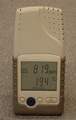
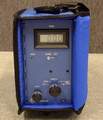
| Carbon Dioxide (CO2) | Carbon Monoxide (CO) | Respiratory Suspended Particulates (RSP) |
 |
 |
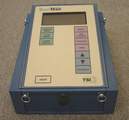 |
| Continuous Monitoring with Engelhard Telaire 7001 Carbon Dioxide Monitor | Continuous Monitoring with Interscan Carbon Monoxide Monitor | Continuous Monitoring with a TSI DustTrak Aerosol/Dust Monitor |
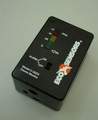
| Nitrogen Dioxide (NO2) | Ozone (O3) | Formaldehyde (HCHO) |
 |
 |
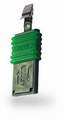 |
| Measurement with Passive Badge Sampler, NIOSH 6700, Colorimetric Procedure | Continuous Monitoring with Heated Metal Oxide Semiconductor Sensor | Measurement with Passive Sampler for Formaldehyde |
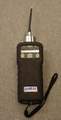
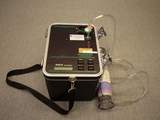
| Total Volatile Organic Compounds (TVOC) | Radon (Rn) | Airborne Bacteria |
 |
 |
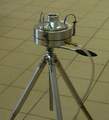 |
| Measurement by Portable ppbRAE TVOC PIDMonitor | Continuous Measurement with a Niton RAD-7 Real-Time radon Monitor. | Sampling by Cascade Impactor Microbial Sampler and Agar Plates. |
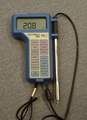
| Air Movement | Room Temperature | Relative Humidity |
 |
|
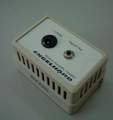 |
| Continuous Measurement with TSI VelociCalc | Continuous Measurement with Engelhard Temperature Sensor | Continuous Measurement with Engelhard Relative Humidity Sensor |
Our Strategy
We will conduct an initial walk-through inspection before the detailed investigation. During the initial inspection, concentration of Carbon Dioxide will be measured. Carbon Dioxide has been commonly adopted by IAQ researchers as an indicator with level above 1,000 part per million (ppm) in office environments indicate that the ventilation rate is low and that other airborne contaminants are accumulating and therefore, further investigation may be needed.
During the detailed investigation, concentration level of the individual parameter mentioned above will be measured. Sampling time will be either a single measurement for half an hour during the expected occurrence of worst scenario, or four 30 minutes measurement evenly distributed during the normal office hours. A report with all the concentration level of the measured parameters will be prepared.
A certificate stating the Indoor Air Quality Level according to the Indoor Air Quality Objectives proposed by the Guidance Notes will be issued if all the 12 parameters mentioned above have been measured. Upon request, suggestion of the measures on how to improve the Indoor Air Quality will be proposed. After the implementation of the suggested mitigation measures, final investigation of the improvement will be conducted.
|
|
|
|
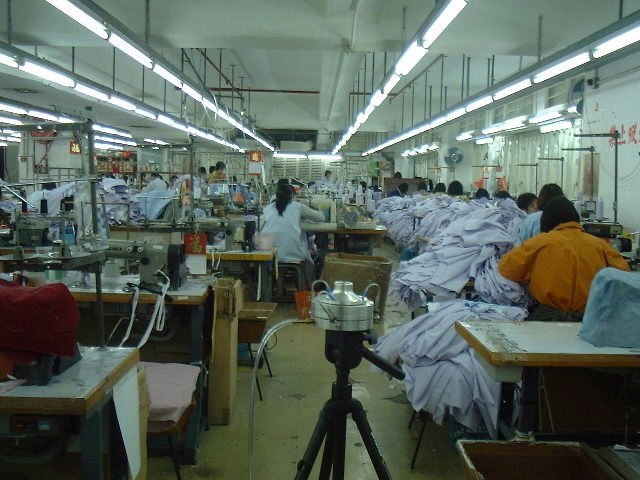
IAQ Measurement in Garment Factory |
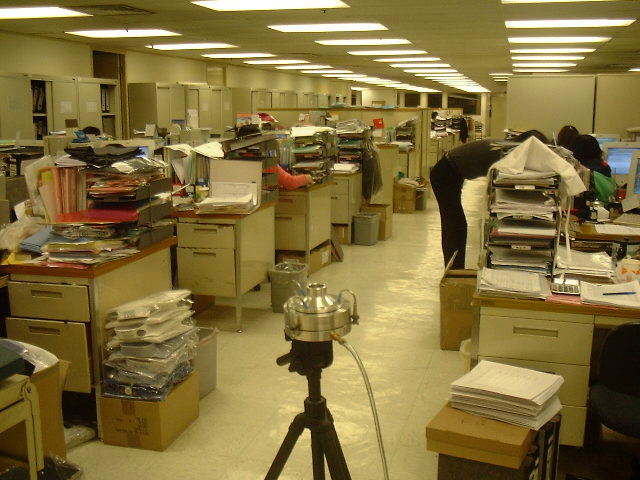
IAQ Measurement in General Office |
Job Reference
1. RoboClean (Hong Kong)
Co. Ltd. (1999-2000)
Indoor Air Quality measurement for Immigration Tower, Central Government
Office, Trade Department Tower, Prince Dental Hospital and Lam Tin Policlinic.
2. DahSing Bank Ltd. (2000)
Indoor Air Quality measurement at DahSing Financial Center, Mong Kok Bills
Center, San Po Kong Branch and Kwun Tong Branch.
3. ASAT Ltd. (2000)
Indoor Air Quality Assessment for QPL Industrial Building in Tsuen Wan.
4. Info Stream Indoor Air Quality Ltd. (2000)
Indoor Air Quality measurement at Shatin Sewage Treatment Work.
5. Alfa Environmental Services Co. (2000)
Yeast and Mould Count measurement at Island Tower in Hong Kong.
6. Nature and Technologies Ltd. (2000)
Radon measurement at 23 Horizon Drive, Chung Hom Kok, Hong Kong.
7. ENSR International, Inc. (2000)
TVOC measurement at No. 8 Lei Yue Mun Road Oil Station.
8. CMA Testing Certification Laboratories (April &
October 2001)
TVOC and Radon measurement at Concordia Plaza, No.1 Science Museum Road,
Tsimshatsui.
9. Info Stream Indoor Air Quality Ltd. (May 2001)
Carbon Monoxide, Respirable Suspended Particulates, Total Volatile Organic
Compounds, Radon, Airborne Bacteria, Room Temperature, Relative Humidity
and Air Movement measurement at Industrial Center, The Hong Kong Polytechnic
University, Kowloon, Hong Kong.
10. Homecare Specialty Ltd. (August 2001)
Airborne Bacteria Count using Swab Kit and RSP measurement at The Kau
Yan School, 1/F, 97B High Street, Sai Wan, Hong Kong.
11. Homecare Specialty Ltd. (August 2001)
Airborne Bacteria, CO2 and RSP measurement at The Foreign Correspondents
Club, 2 Lower Albert Rd., Central, Hong Kong
12. Steamatic Technologies (HK) Ltd. (August 2001)
Airborne Bacteria, CO2 and Ozone measurement at CLP Engineering, 36/F
Asia Trade Centre, 76 Lei Muk Road, Kwai Chung, New Territories, Hong
Kong.
13. Homecare Specialty Ltd. (August 2001)
Airborne Bacteria Count using Swab Kit and CO2 measurement at The Neighbourhood
Advice Action Council Yuen Long Day Nursery, 1/F, Orion Court, No. 23
Mau Tan Street, Yuen Long, N.T.
14. Homecare Specialty Ltd. (August 2001)
Airborne Bacteria and CO2 measurement at 11/F., East Asia Industrial Building,
2 Ho Tin Street, Tuen Mun, N.T., H.K.
15. Homecare Specialty Ltd. (September 2001)
Airborne Bacteria, CO2 and RSP measurement at Rm 305, 30/F, Wyler Center
2, Tai Lin Pai Road, Kwai Chung, New Territories, Hong Kong
16. Homecare Specialty Ltd. (November 2001)
Airborne Bacteria, CO2 and RSP measurement at North Office Block Superterminal
I, Hong Kong Int'l Airport
17. Homecare Specialty Ltd. (November & December
2001)
Airborne Bacteria, CO2, TVOC, Formaldehyde and Ozone concentration measurement
at U-FREIGHT LIMITED, Unit B, 2/F., Freder Centre, 30 Mok Cheong Street,
Kowloon, Hong Kong.
18. Homecare Specialty Ltd. (December 2001)
Airborne Bacteria, CO2 and RSP measurement at Eternal Way Ltd., 30/F.,
CNT Tower, No. 338 Hennessy Road, Wan Chai, Hong Kong.
19. Homecare Specialty Ltd. (January 2002)
Airborne Bacteria, CO2 and RSP measurement at Just Gold (Head Office),
No. 1 Ground Floor, TRP Commercial Centre, 18 Tanner Road, North Point,
Hong Kong
20. Homecare Specialty Ltd. (January 2002)
Airborne Bacteria, CO2 and RSP measurement at Block C, 2/F., Tuen Mun
Industrial Centre, 2 San Ping Street, Tuen Mun.
21. Homecare Specialty Ltd. (August 2001 & February
2002)
Airborne Bacteria, CO2 and RSP, Air Movement measurement at Tsuen Wan
Adventist Hospital, 199 Tsuen King Circuit, Tsuen Wan, N.T.
22. Steamatic Technologies (HK) Ltd. (February 2002)
Airborne Bacteria and Yeast & Mould measurement at Lever Shirt G.
W. B. & D. Factory Limited. 5/F., Block B, Hoi Luen Industrial Centre,
55 Hoi Yuen Road, Kwun Tong, Kowloon.